SPEI Is About to Eat Mexico's Card Payments
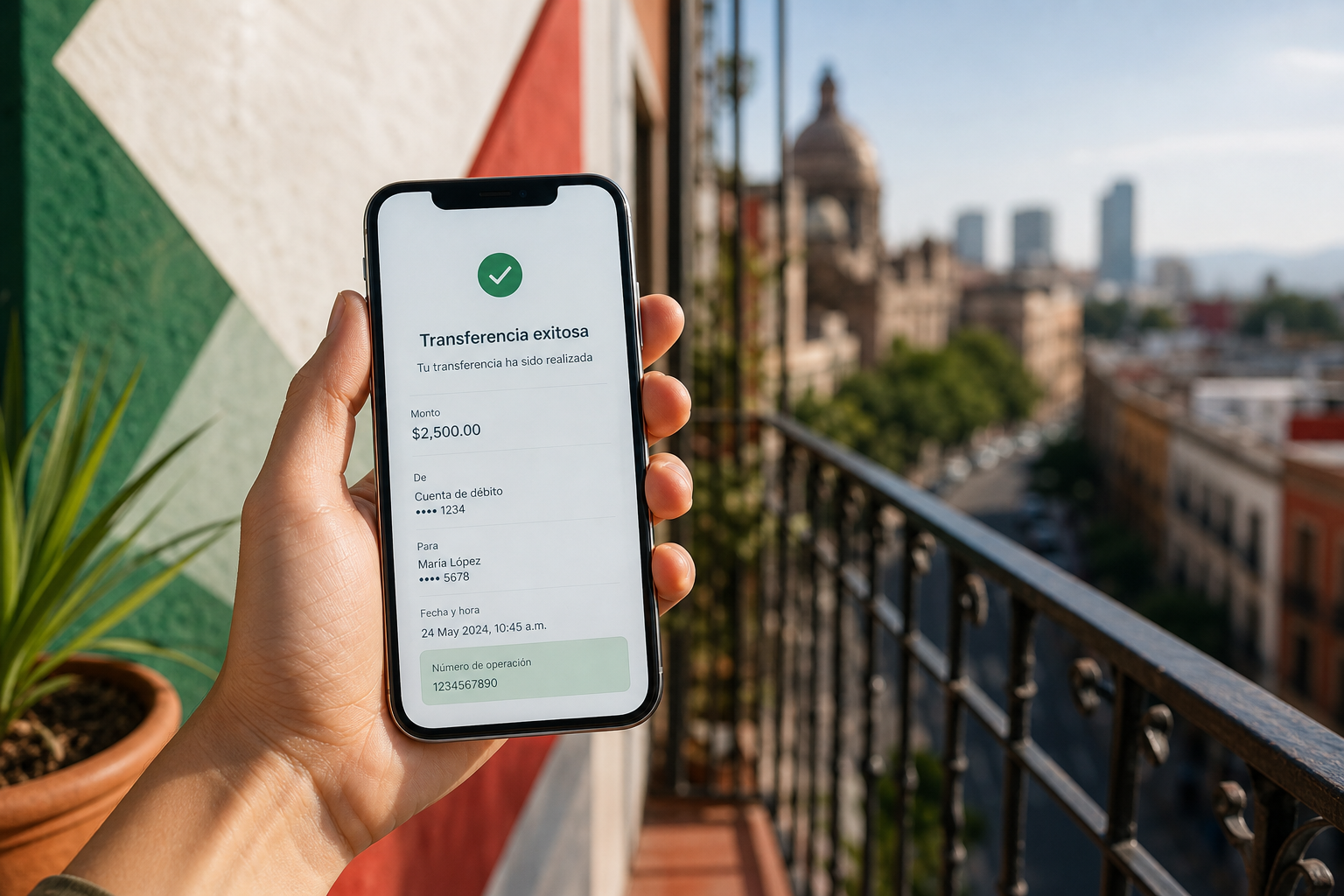
"Pásame tu cuenta y te transfiero" is not just a polite way to split the bill anymore. It is the sound of the Mexican payment stack changing shape.
A few years ago that phrase meant a chore. You had to log into your bank app, copy a 20-digit CLABE from a WhatsApp message, triple-check the digits, paste it into three different fields, and pray the name matched. Today it means something else. It means the money lands before the waiter brings the change. It means the corner store takes transfers as casually as it takes coins. And it means a 22-year-old central-bank system is about to outrun the combined volume of every credit and debit card swipe in Mexico.
The 2025 numbers are hard to argue with:
- 7.3 billion transfers processed through SPEI, according to STP.
- Close to 600 trillion pesos moved through the rail — roughly 17 times Mexico's GDP.
- 73.5 million adults already use the system.
- 78% of formal businesses accept electronic transfers.
- And on average, SPEI handled nearly 20 million operations per day.
Banxico's forecast is the headline: by the end of 2026, the number of SPEI operations is expected to exceed the combined number of credit and debit card payments in the country.
That is not a fintech marketing slide. That is a structural shift in how a 130-million-person economy moves money.
Figure 1: SPEI is invisible infrastructure made visible by a five-second mobile UI.
What SPEI actually is
SPEI — the Sistema de Pagos Electrónicos Interbancarios — went live on August 13, 2004. It is owned and operated by Banco de México, which makes it a public good dressed as a payment network. Anyone with a bank account, a fintech wallet, or a regulated financial account can use it because almost every regulated institution in Mexico is connected to it.
Technically, SPEI is a real-time gross settlement (RTGS) system with a hybrid twist. In classic RTGS every payment is settled one at a time against central-bank money. SPEI does something more practical: it queues incoming payment orders, runs a settlement engine every few seconds, and releases as many payments as the available liquidity allows. If the sender's bank has the funds in its Banco de México account, the transfer settles instantly. If not, the order waits in the queue for the next cycle. Unsettled orders are cancelled at the end of the day, and the remaining SPEI balances are transferred to the SIAC system.
That design matters. It means SPEI is not a deferred net settlement system like older card clearing houses. It is also not a pure gross settlement engine like Fedwire or TARGET2. It sits in between: fast enough for retail, safe enough for high-value treasury, and efficient enough with liquidity that a small bank does not need to park billions at the central bank to stay in the game.
Key operational constraints that keep it honest:
- The system runs 24 hours a day, 365 days a year, since the November 2015 extension.
- Participants must forward a customer's payment order to the recipient bank within 30 seconds of receiving it.
- Recipient banks must credit the customer's account within 30 seconds of receiving the settled payment.
- No overdrafts are allowed. If the sending institution does not have the liquidity, the payment does not go through.
- Safety relies on digitally signed messages using Banxico's own public-key infrastructure.
That last point is worth pausing on. SPEI messages are signed by the participating institution, not the individual user. The rail is trusted because the central bank vouches for the participants, and the participants vouch for their own customers. It is a hierarchy of trust that is old-fashioned in theory but extremely effective at scale.
How a transfer actually moves
Open a Mexican banking app, pick "transferencia", and what happens next is more interesting than the UI suggests.
- You type a CLABE or select a contact. The CLABE is an 18-digit standardized account key that encodes the bank, branch, and account. It is the addressing layer of the Mexican payment internet.
- Your bank validates the destination. It checks whether the recipient account exists, is active, and can receive the transfer.
- Your bank constructs a signed payment order. The order contains sender and recipient identifiers, amount, a trace number, and a priority flag if the institution chooses to use one.
- The order enters SPEI. SPEI authenticates the message with the participant's digital certificate and places it in the settlement queue.
- SPEI settles in seconds. If the sender's bank has the liquidity, Banco de México debits the sender's institution account and credits the recipient's institution account. The movement of central-bank money is the settlement. There is no "pending" in the same sense as a card auth.
- The recipient bank gets the good news. It receives the settled order and credits your friend's account within the 30-second window.
- Both banks reconcile. Pending payments that could not settle are cancelled at end of day; SPEI balances then flow into SIAC for overnight accounting.
This is why the experience feels instant in a way cards never quite do. A card tap authorizes a promise. A SPEI transfer moves the actual liability. The mental model changes: the money is gone and arrived, not pending and eventually reconciled.
CoDi: the QR layer that rides on top
SPEI by itself is a bank-to-bank protocol. It becomes a retail payment system through CoDi (Cobro Digital), launched by Banco de México in 2019. CoDi uses QR codes and NFC to trigger a SPEI transfer between customer and merchant accounts.
The mechanics are simple. A merchant generates a CoDi request — a QR code or a notification sent to the customer's phone. The customer confirms the payment in their banking app, and the underlying transaction is a SPEI transfer. No card network. No acquiring bank markup. No point-of-sale terminal beyond a printed QR code or a phone screen.
CoDi also inherits SPEI's operating rules: 24/7, near-instant, and with no charge to the end user. For small merchants that cannot justify a card terminal, that is a big deal. It is also a big deal for fintechs, because any app that can send a SPEI transfer can become a checkout experience without negotiating with Visa or Mastercard.
CoDi's adoption has been uneven, but the trend is clear. SPEI is no longer just for paying rent or sending money to family. It is becoming a merchant acceptance rail.
Why cards are suddenly the underdog
Cards were the definition of electronic payments for a generation. They still are, in many places. But in Mexico the economics and physics are tilting toward transfers.
| Dimension | Credit / debit cards | SPEI transfers / CoDi |
|---|---|---|
| Settlement | Batch, often T+1 or longer for merchants | Near real-time, central-bank money |
| Cost to merchant | Interchange + acquiring fees | Minimal or zero for consumer-facing transfers |
| Required hardware | POS terminal, card reader, network contract | A phone and a bank app, or a printed QR |
| Hours of operation | Card networks run continuously, but merchant settlement follows banking windows | 24/7/365, including holidays |
| Failure mode | Authorization approved, settlement delayed or charged back | Insufficient liquidity = transfer rejected immediately |
| User mental model | "I swiped" | "I sent you the money" |
The last row is the one that matters. A card transaction is an instruction to a network. A SPEI transfer is a movement of money. That difference becomes visible when people compare receipts, settle debts, or run a small business.
Cards still dominate micro-payments. But SPEI dominates everything else: rent, utilities, supplier invoices, peer-to-peer splits, online purchases, and an increasing share of in-store retail. The average transaction size in SPEI has been dropping for years; 94% of 2025 SPEI operations were for less than 10,000 pesos, according to STP. The rail that was designed for corporate treasury is now being used to pay for tacos.
The cash paradox
Here is the part that keeps the story honest. Despite all this growth, cash is still the king of small Mexican purchases. Roughly 80% of people still use cash as their main payment method for purchases of 500 pesos or less.
That is not failure. It is a reminder that payment behavior is local and layered. Cards never killed cash in Mexico. SPEI will not either, at least not in the street-corner, under-500-peso economy. What SPEI is doing is displacing the middle band: the rent, the dentist bill, the online order, the freelance invoice, the B2B payment that used to be a check or a card-on-file.
CoDi is the bet on the lower end. If scanning a QR becomes faster and more reliable than counting bills, the cash stronghold will shrink. But that requires more than technology. It requires trust in the phone, stable connectivity, and merchants who do not want to make change.
The next rail: SPEI 2.0 and beyond
The current system is not standing still. At the 89th Banking Convention in Cancún, Banxico signaled that SPEI 2.0 is in development, with targeted deployment in the near term. The promised upgrades include:
- Mass processing capabilities for high-volume retail and government disbursements.
- Multicurrency support, which matters for cross-border trade and remittances.
- Intelligent payment functions — likely smarter routing, conditional payments, and richer message formats.
- Strengthened cryptographic security to stay ahead of quantum-adjacent threats.
There is also the broader open-finance context. As Mexico's financial APIs improve, SPEI becomes less something you manually trigger and more something applications trigger on your behalf. The difference between "I sent you money" and "my app sent money because I authorized it" is where the next wave of fintech products lives.
The risks are real too. Faster settlement means faster fraud. Instant irrevocability means less room for buyer remorse. And a centrally operated system is a single point of operational stress that has to stay up under heavy load. Banxico has managed that well so far, but scale is a different kind of test.
Conclusion
Mexico's payment landscape is not a clean replacement story. It is a story of coexistence: cash for the small stuff, cards where the terminal already exists, and SPEI for everything that can be reduced to an account number and a few seconds.
The reason SPEI is winning is not marketing. It is architecture. A public, real-time, central-bank-operated settlement rail with an open protocol is simply a better coordination mechanism for a digital economy than a stack of private card networks layered on top of deferred settlement.
So when someone says "pásame tu cuenta y te transfiero," they are not being casual about money. They are choosing the fastest, cheapest, and most direct path through the Mexican financial system. After 22 years, that path has a name, and that name is SPEI.
References:
- SPEI characteristics — Banco de México
- Expansión: SPEI procesó más de 7,300 millones de transferencias en 2025
- ClearingPost: Banxico forecasts SPEI to surpass card payments by end of 2026
- CoDi — Banco de México
- World Bank Fast Payments Toolkit: Mexico SPEI case study
Diego Vallejo, August 2026